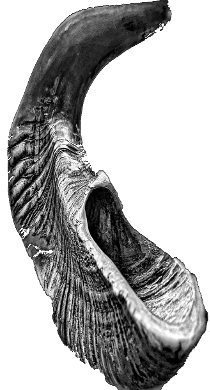
FEAST OF TRUMPETS / YOM TERUAH / ROSH HASHANAH (23-24 September 2025)
Offerings in the Seventh Month
(Numbers 29:1-6)
23 The LORD told Moses, 24 “Tell the Israelis that on the first day of the seventh month you are to have a Sabbath of rest for you—a memorial announced by a loud blast of trumpets. It is to be a sacred assembly. 25 You are not to do any servile work. Instead, bring an offering made by fire to the LORD.”
Leviticus 23:23-25
WHAT ARE THE NAMES FOR THIS 5th FEAST?
– Yom Teruah. This is Hebrew for the Day of the Awakening Blast. Feast of Trumpets is the English equivalent. It is the only feast with an emphasis on a musical instrument.
– Rosh Hashanah. In Hebrew this means Head of the Year. It is the beginning of the Jewish Civil New Year, considered by the Rabbis to be the ‘Birthday of the world’, ie, the day on which God created Adam. It is celebrated as the Jewish New Year, whereas Nisan is the Biblical New Year as instituted by God before the deliverance of the Hebrews from Egypt at Passover. [1]
Like the school Year, Financial year.
WHERE ARE GOD’S INSTRUCTIONS RECORDED?
Leviticus 23: 23-25. Numbers 29:1-6, Ezra 3:1-6, Nehemiah 7:73-8:12.
WHAT ARE HIS INSTRUCTIONS?
Note:- only 3 instructions?
– It’s to- be held on the first day of the seventh month, the Hebrew month of Tishri.
– It’s a Shabbat rest, a Holy convocation, and not doing any kind of work.
– It’s a Memorial Day for blowing the trumpet/shofar.
– This Feast is not connected to the agricultural year in any way. There was no obligation for men to attend, it was for the Priests and people living in Jerusalem. A purely spiritual feast.
– It occurs six months after Passover, and in between are hot, dry, summer months without rain. The work of harvesting the crops fills these months.
– Numbers 29:1-6, Offerings of 1 young bull, 1 ram, 7 male lambs, grain, oil and wine offerings plus 1 male goat as a sin offering plus New Moon offerings. plus Daily offerings. Refer to sacrifice notes.
SOME INTERESTING FACTS:-
Even as the seventh day and the seventh year are holy under the Mosaic covenant, so too is Tishri, the seventh month.
The Feast of Trumpets begins the autumn group of three feasts, collectively called the ‘High Holy Days’, which all occur close together in this month.
It is the only Jewish holiday which occurs on the first day of the month, at the New Moon, when the moon is dark and only a thin crescent is visible above the horizon at sunset. All other Jewish feasts occur later in their respective months when the moon is bright. It is always celebrated over two days because of the difficulty of knowing exactly when a new month began and getting the message out to Jews living outside Israel.
In ancient Israel; each new month/new moon was normally announced by short blasts of the trumpet/shofar, (Numbers 10:10), but the New Moon of the seventh month was celebrated by long blasts, emphasising its solemnity and uniqueness among months”. [2]
Because it occurs on the 1st day of the month, it could be called, ‘the day that no-one knows’, or the ‘hidden day’. Jesus said five times that no one knows the exact day or time of his return. Matthew 24:36,42,44,50, 25:13, Mark 13:32-33, 1 Thessalonians 5:2. Rosh Hashanah, the common name for this feast, can also hide the seriousness of God’s warning trumpet call.
Remember I told you in the introduction, that Genesis 1:14 says the sun, moon and stars were given for signs, seasons, days and years. The word SEASONS does not just mean spring, summer, autumn, winter, but in Hebrew is Moed which is exactly the same word as Feast! God uses His heavenly creations to let us know when His Feast days are happening! Psalm 104:19 “He appointed the moon for seasons/feasts”.
The Feast of-Trumpets happens on Israel’s dark day. It occurs at the New Moon when the primary night light of the heavens are darkened. Israel’s prophets repeatedly warned of a coming dark day of judgment. They knew it as, “The Day of The Lord”, that terrible period at the end of this age when the Lord will pour out His fiery judgement. Isaiah 13:9-16, Joel, Amos 5:13-26, Zephaniah 1-2:3. National repentance by Israel is a prerequisite to the Messiah’s return. Israel’s repentance is one of the chief purposes of the Day of the Lord. Israel’s King will not return to her until she is ready to receive him.
The rabbis of old correctly understood the prophets when they declared: “Were Israel to practise repentance for even one day, they would be redeemed and the Branch of David (Messiah) would come”. (Song of Songs Rabat 5:2)
WHAT KIND OF TRUMPETS WERE BLOWN IN BIBLICAL TIMES?
Two types of trumpets are mentioned in Scripture for the Priests to play, although they are usually not clearly differentiated.
1. Straight silver trumpets blown over the sacrifices. (Numbers 10:10).
2. A shofar (ram’s horn or the horn of a kosher animal.) A reminder of God’s deliverance of Isaac through the ram caught by its horns in the thicket. Genesis 22:13 (Trumpets constructed from cows horns were rejected due to the reminder of Israel’s idolatrous worship of the golden calf in the wilderness.) [3]
GOD BLOWS THE SHOFAR:-
Scripture often speaks of men or angels blowing trumpets, yet only twice is it recorded that GOD blows a trumpet. In both instances it is a shofar and in relation to Israel.
The first occasion and mention of a shofar was at Mount -Sinai when the Lord descended with a smoky fiery tempest and the sound of the shofar. Exodus 19:18-20.
The second occasion is recorded in Zechariah 9:14 when the Lord is defending His people Israel.
Ancient rabbis repeatedly quoted this verse in connection with the coming of the Messiah.
So, the First Shofar was blown at The Feast of Pentecost/Shavuot by the Lord and The Last Shofar is the 100th blast blown at The Feast of Trumpets/Teruah.
The first and last trumpet/shofar blasts represent the two horns of the ram on Mount Moriah which God provided as a substitute for Isaac and they remind Jews of Abraham’s total devotion to God in being prepared to sacrifice his son. Genesis 22.
The Great Shofar/Shofar HaGadol, is blown to call Jewish people out of their lands of exile, back to the land of Israel. Isaiah 27:13. [4]
IN BIBLICAL TIMES, WHEN WAS THE TRUMPET BLOWN?
– It gathered an assembly before the Lord and for camp movements. Numbers 10:2-8.
– It was blown over the sacrificial ceremony in the tabernacle. Numbers 10:10.
– It sounded at the beginning of each month and on Feast Days. Numbers 10:10.
– It was blown on The Day of Atonement, to announce The Year of Jubilee. Leviticus 25:8-13.
– It sounded like a battle alarm or coming disaster. Numbers 10:9, Joshua 6, Judges 3:27, Jude 7:19-22, Nehemiah 4:18-20, Jerermiah 6:1, Ezekiel 33:3-6. Revelation 8,9,10,11.
– It was used as an instrument of praise and worship. 2 Chronicles 29:25-36.
– it was blown together with other instruments, being a -powerful catalyst to bring the Glory of God. 2 Chronicles 5:11-14.
– It announced the coronation of a new King. 2 Samuel 15:10, 1 Kings 1:34,39, 2 Kings 9:13, 11:12-14.
– It heralds the Day of the Lord. Joel 2:1.
– It is a sound that will herald the coming of the Messiah. 1 Thessalonians 4:16.
– It will awaken the righteous dead. 1 Corinthians 15:51-52. 1 Thessalonians 4:13-18. Psalm 47:5 Can be translated, “God raises them up with a shout (blast)”. [5]
HAS JESUS FULFILLED THIS FEAST?
Israel’s four springtime feasts, Passover, Unleavened bread, First fruits and Pentecost, were all fulfilled In connection with the Messiah’s first coming.
Israel’s three autumn feasts, Trumpets, Day of Atonement Tabernacles, will be fulfilled at His second coming.
The ancient rabbis held a similar view: “In the month of Nisan (Passover), our ancestors were redeemed, and in Tishri, they will be redeemed in the time to come”. (Rosh Hashanah 11a).
This feast is still waiting to be fulfilled at a future time. It is the very next feast on God’s calendar and it will soon be Milled.
Since this Feast has had no fulfilment, yet, we have no historic event to look back on, however we do know that all the feasts have in them shadows of things to come and all point to Messiah. Cololssians 2:16-18.
We can be really sure then, that when this feast is finally fulfilled, it will include within it many of the reasons for the shofar to be sounded in Biblical times. (J Note 1.)
HOW DOES THIS FEAST FIT INTO MY CHRISTIAN JOURNEY?
This feast is also called the ‘Day of- the wakeup- trumpet” for a reason. Repentance, known as ‘Teshuvah’ in Hebrew, literally means “to return”; that is:- to return to God. The Teshuvah – trumpet calls everyone to prepare to come before the King of the world (“Turn around!” says the Jewish tradition, for the The Day of Atonement is coming, but also the Great Day when God will judge. 6. It involves a reversal in spiritual direction and is accomplished by two actions. On the one hand, turning away from sin by forsaking it. Ezekiel 18: 30-31. On the other hand, turning toward God by putting complete trust in Him and His Redeemer, The Messiah. Psalm 2:12. There is no other way to come to God.
It is to this same great King over all the earth that, “every knee shall bow” and, “every tongue shall take an oath”. Isaiah 45:23.
The day is coming in which the Messiah King will come and Jesus will return to Jerusalem. He will reign over all the earth. He will reign forever, just as the prophets foretold. But not all will enter His glorious heaven. When the Redeemer comes to .Some he will come/to-those who turn from transgression” (Isa 59:20) and to those who, “put their trust in Him”. (Psalm 2:12). [7]
The blast of the shofar reminds us to forget self and remember God, putting His agenda at the front of our minds. It’s. also an opportunity for remember our own ‘Sinai’ event, where- God invited-.us into a covenant with Him and we said, Yes. As we gaze up at God and give Him our attention, we become more tuned in to His agenda. God has purposes and plans that He is doing in our days, and He is looking for those who will work with Him. We need to be seeking God’s face to hear His instructions to us and to understand His word to the world in these times. God is calling us to be His trumpet blowers in this world conveying His message; The trumpet blast calls out.. It is a call to remember the God of Israel and an invitation to meet with Him. [8]
We may only have a few more rehearsals left to prepare ourselves for this great day.
ELUL, (August/September), is an important month which precedes Tishri and The autumn feast season.
Jewish understanding is that all Israel received the Torah on Pentecost/Shavuot, (Exodus 20), then Moses went up the mountain to receive the tablets inscribed by God’s finger. Exodus 20:2l. He descended with the tablets 40 days later only to find the people worshipping the golden calf. 32. He broke the tablets and climbed the mountain again to plead for the people on the 1st of Elul, returning 40 days later with a shining face, on 10th Tishri (Yom Kippur) with the second tablets. Exodus 34:1-5,28-29. In the near future, all of Israel shall behold their Messiah in the same manner. Zech.12:10. [9]
During the month of Elul therefore, -Jewish people focus on preparation for the autumn feasts, especially on meeting God during this period. (J Note2)
Almost every day, throughout the month, the shofar is sounded, symbolically to make everyone aware of this important period.
Elul is called the month of ‘Teshuvah”. The Hebrew word Teshuvah incorporates repentance, but it is much more than just repenting of sin; it is the decision to return to the right way and refrain from things that grieve God. The Jewish view is that repentance is not an event, it is a process through which a person recognises the distance that has come between himself and God, then resolves to close the gap, and commits himself by returning to Torah and its commandments. The 40 days between Elul and Yom Kippur offer man time to work through this process.
According to Hebrew tradition, this is a period of time that the -King is Near”. God is closer; He has “left His Throne”. Isaiah 55:6. “Seek the Lord while He may be found, call upon Him while He is near.” in the month of Elul the prophet Haggai, whose name in Hebrew is Chag = meaning Feast of the Lord, received his word from God. It was a request that people seriously consider the results of living for themselves and advise instead that they build God’s house. Haggai 1:10. (J Note 2)
HOW IS THIS FEAST OBSERVED TODAY?
– Repentance.
Tradition has It that on the Feast of Trumpets on Tishri 1st, the gates of heaven are opened and the books are opened,… the book of the righteous, the book of the wicked and the book of remembrance: The righteous and the wicked are inscribed and seated on this day and all others have until The Day of Atonement/Yom Kippur to repent. The 10 days between these two feasts are known as the ‘Days of Awe’. Tradition has it that on the Day of Atonement/YomKippur God decides the fate of those souls and the gates of heaven are closed for another year. These traditions and beliefs are not mentioned in the Bible. However, the opening of books in an atmosphere of judgement is: Daniel 7:10, Revelation 20:12, and Moses wrote about a book which could have names removed from it. Exodus 32:32-33, Luke 10:19-20, Revelation 3:5.
The greeting on Yom Teruah is: “May you be inscribed” (in the scroll or book of life).
On the first, afternoon of Rosh Hashanah observant Jews go to a body of water where they perform the ceremony of, “casting away their sins”. This is called “Taslich”, based on Micah 7:19 – He will again have compassion on us, he will tread our iniquities underfoot. You will cast all our sins into the depths of the sea. Psalm103:12 -As far as the east is from the west, so far does he remove our transgressions from us. Isaiah 43:25 -I am he who blots out your transgressions for your own sake, and” I will not remember your sins. 11. Jewish people never have an assurance of forgiveness, because they don’t know/understand the work of Jesus the- Messiah- yet. This excludes the completed or Messianic Jew or Jewesses.
– Coronation.
Since shofars were always sounded at a King’s coronation this feast celebrates the coronation and dominion of the King of Kings as absolute sovereign as well as supreme judge, it instils awe and -fear that people must feel before a king, pronounces judgement over his subjects. [12]
The morning Synagogue services are long and include the shofar being blown 30 times after the Torah reading. Before the day ends, it is blown 100 times.
Before the festive meal, candies are lit by women or girls while reciting the appropriate blessings.
– It is traditional to begin the meal with slices of apple dipped.in-honey. But before eating, the blessing, “May it be Your will, to renew for us a good and sweet year” is spoken.
– The bread, chanukah, is a round loaf often sprinkled with raisins for this feast; signifying the cycle of the year and when eaten it is first dipped in honey.
– The heads of fish, rams or any other kosher heads are used in the meal, this signifies, “We are the head and not the tail’.
– Round vegetables are only used, signifying the cycle of the year. Sweet fruit is eaten: Nehemiah 8:2, 9-12.
Other traditions:-
– Because the main theme of Rosh Hashanah is repentance for sins and seeking forgiveness from those who were wronged or offended throughout the past year, it Is customary for some Jewish people to have -discussions with family members, classmates, work.colleagues and friends to whom apologies are due. (Apparently even radio announcers have been known to ask their listeners for forgiveness for anything that has offended them;)
– Sending New Year cards to relatives and friends, taking family photos, trying out something new, ( a hobby, clothes, food, fruit.)
– Ancient Jewish tradition also held that the resurrection of the dead would occur on Rosh Hashanah.
Reflecting this tradition, Jewish gravestones were often engraved with a shofar. Psalam 47:5 Can be translated, “God raises them up with a shout (blast)”, [2]
HOW IS THE SHOFAR PLAYED?
After the distraction of the Temple, much debate- arose among the rabbis concerning the sounding of the shofar since Scripture did not explicitly describe the manner of blasts required. A compromise was reached that covered all possibilities.
The Tekiah – defined as a long, unwavering blast
The Shevarim – defined as three short, broken blasts. (A “im” ending of a word is like our “s” ; it is a plural ending meaning three or more).
The Ternate– defined to be a; nine-part staccato blast-somewhat reminiscent of sobbing.
Collectively, the following pattern was developed for blowing the shofar: One long blast (tekiah) — three short blasts (shevarim) — nine staccato blasts (teruah) — one tong blast (tekiah), held as long as the blower had breath. Different sounds of the trumpet mean different things, but they all call For attention. The trumpet blast conveys a message.
Summary:
– Kingship, Shofar blowing, Repentance, Jewish New Year.
– Resurrection of the dead.
– Being prepared and ready for Jesus’ return.
Sources:-
1. The-Feasts of the Lord (YHWH). By Marcia fJalthus.
2. The Feasts of the Lord. By Kevin Howard & Marvin Rosenthal. Page 105. +114.
3. The Feasts of the Lord; By Kevin Howard & Marvin Rosenthal. Page 105-107.
4. The Feasts of the Lord (YHWH). By Marcia Malthus.
5. Out of Zion Ministries. By David Silver
6. Wake Up. By Arno Lamm & Emile-Andre VariBeckevoort. Page 325.
7. The Feasts of the Lord. By Kevin Howard & Marvin Rosenthal. Page 112-115.
8. One For Israel. Biblical Feasts
9. Wake Up. By Arno Lamm & Emile-Andre VanBeckevoort. Page 314- 3T5.
10. D.L. Shaw. The Three Feasts of Israel, The Feast of Tabernacles.
11. Chabad.org. High Holidays.
12. The Feasts of the Lord (YHWH). By Marcia Malthus.
Jenny Milmine 2025
The Day of Atonement is fulfilled with the Messiah. This concept is taught in the Old Testament in Isaiah 52:13–53:12. Here the Messiah is pictured as the final Day of Atonement sacrifice which contains the concept of substitution and the concept of atonement. Contextually, Isaiah 52:13–53:12 is not only a prophecy of the Crucifixion, it is also the words of Israel’s confession of her national sin for salvation as a nation.
The key element of the Day of Atonement is the element of affliction. In the biblical practice, it was the affliction of the soul. In the Jewish practice, it is the affliction of the body. The Day of Atonement is to be fulfilled by the Great Tribulation where both types of affliction will be present. It is no accident that the Tribulation is often referred to in the Scriptures by the term affliction. It is a time of tremendous affliction in fulfillment of the affliction of the Day of Atonement. During the Great Tribulation, there will be the affliction of both the body and the soul.
The affliction of the body of Israel is detailed by Hosea 5:15–6:3 when Israel as a nation will be afflicted during the course of the Great Tribulation. Hosea 5:15 states: I will go and return to my place, till they acknowledge their offence, and seek my face: in their affliction they will seek me earnestly.
Zechariah 13:8–9 also details this affliction that will destroy two-thirds of the nation of that day and leads to a second type of affliction: the affliction of the soul.
The affliction of the soul is given in Zechariah 12:10–13:1 when the Spirit is poured out on the people of Israel, and they will then “look unto the One they pierced and mourn for Him as one mourns for an only son.” The national regeneration of Israel will come by means of the afflictions of the Great Tribulation and that, in turn, will lead to Israel’s confession of her national offense with the words of Isaiah 53:1–9.
The Feast of Trumpets is to be fulfilled by the Rapture of the Church, and the Day of Atonement is to be fulfilled by the Tribulation. Just as the Feast of Trumpets precedes the Day of Atonement, by the same token, the Rapture will precede the Great Tribulation.
0. 7 Festivals and a Fast – Introduction
1. 7 Festivals and a Fast – The Festival of Passover
2. 7 Festivals and a Fast – The Festival of Unleavened Bread
3. 7 Festivals and a Fast – The Festival of First Fruits
4. 7 Festivals and a Fast – The Festival of Pentecost or Shavuot
5. 7 Feasts and a Fast – The Festival of Trumpets
6. 7 Festivals and a Fast – The Fast of THE DAY OF ATONEMENT/ YOM KIPPUR
7. 7 Festivals and a Fast – The Festival of Tabernacles
8. 7 Festivals and a Fast – The Weekly Sabbath Festival
9. 7 Feasts and a Fast – Other Information
Other slides in this module:
- Life of Moses – Exodus, Leviticus, Numbers, and Deuteronomy
- 300-year gap between Joseph and Moses
- First 40 years of the life of Moses
- Thutmose I, the Pharaoh or king of Egypt
- Miriam kept eye on Moses after he had been placed as a baby in a boat
- Second 40 years of the life of Moses
- God spoke to Moses out of a burning bush
- Moses was asked to take off his sandals by God
- The third 40 years of the life of Moses
- Aaron’s Staff becomes a Snake
- The ten plagues of Egypt
- 1st Plague – Blood
- 2nd Plague – Frogs
- 3rd Plague – Lice or Gnats
- 4th Plague – Dung beetles
- 5th Plague – Pestilence
- 6th Plague – Boils
- 7th plague – Nut – Egyptian Goddess of the Sky
- 8th Plague – Locust
- Ninth plague – Darkness
- Tenth plague – Firstborn die
- Passover commemorates the Exodus from Egypt
- Moses the friend of God
- Pillar of Cloud by Day
- Pillar of fire by night
- The Chariots of the Egyptian army
- Moses crosses the Red Sea
- Moses’ older sister Miriam sings a song
- Waters of Marah and Elim
- Manna means ‘What Is It?’
- Water from The Rock at Massah
- Moses at Mount Sinai
- The Ten Commandments or Ten Words of God
- The Three groups of Annual Feasts of God
- The Festival of Passover
- The Festival of Unleavened Bread
- The Festival of First Fruits
- The Festival of Weeks or Pentecost
- The Festival of Trumpets or Feast of Shofars
- The Fast of Yom Kippur
- The Festival of Tabernacles
- The Weekly Sabbath Festival
- The Golden Calf, the idol made by Aaron
- Moses with the New Stone Tablets
- 1st five of the Ten Commandments
- 2nd five of the Ten Commandments
- Ark of God
- The High Priest of Israel
- Tabernacle of God
- Aaron and Miriam oppose Moses
- Exploring Canaan by 12 spies
- 37 years in the wilderness
- Aaron’s Rod that budded
- Speak to the Rock “Give Water”
- Death of Aaron
- The Bronze Snake
- Balak Summons Balaam
- Six cities of Refuge for Israel
- Daughters of Zelophehad
- Moses Blesses the Tribes with Three Sermons
- Moses lived for 120 years
- Caleb was the son of Jephunneh
- Joshua – The Fall of Jericho
- Questions and Answers 1-16
- Questions and Answers 17-32
- Questions and Answers 33-49
- Timeline for Life of Moses
- Next Module – Judges or rulers of Israel
- 8 Appointed Times – Introduction
- 8 Appointed Times – Weekly Sabbath
- 7 Feasts and a Fast – PASSOVER
- 7 Feasts and a Fast – UNLEAVENED BREAD
- 7 Feasts and a Fast – FIRSTFRUITS
- 7 Feasts and a Fast – PENTECOST
- 7 Feasts and a Fast – FEAST OF TRUMPETS
- 7 Feasts and a Fast – YOM KIPPUR
- 7 Feasts and a Fast – 7th Feast – TABERNACLES
- 7 Feasts and a Fast – Other Information
- Rosh Hashanah or Yom Teruah (The Day of the Sounding of Shofar)
- Yom Kippur, means “Day of Atonement”
- The Jewish Festival of Sukkot
- Background Information – Life of Moses
- Resources – Life of Moses