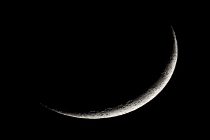
On the Jewish calendar, the month of Nisan is the start of the religious calendar.
(We will try to use the Jewish calendar as a way of creating a timeline.)
The month of Nisan starts with the sighting of the new moon and a special feast called Rosh Chodesh or Rosh Hodesh (Hebrew: “Head of the Month”). No fasting or mourning is allowed.
Then, in fourteen days’ time—on the 14th of Nisan—the day The Passover is celebrated. It is also the full moon and the spring equinox. The name “Passover” comes from the miracle in which God “passed over” the houses of the Israelites during the tenth plague while they lived in Egypt.
The Jewish Passover may well be the most central feast on the Jewish calendar. It involves the whole family, as together they relive and celebrate their ancestors coming out of Egypt under the leadership of Moses, who received instructions directly from God.
Jesus, too, remembered this event with His Last Passover, where He also introduced the Communion Supper, which the Christian community observes at every possible opportunity.
Most commentators agree that Jesus died between the years AD 26 and AD 36, in the months of March or April, and the days differ depending on the month and year. Using the Jewish calendar, Jesus died between the years 3786–3796, in the month of Nisan—the 15th of Nisan, to be exact. And Jesus is the Son of God.
All Scriptures quoted are from the ISV Bible and used with permission, or the Berean Standard Bible, which is in the public domain as of April 30, 2023.
Other slides in this module:
- New moon for the month of Nisan
- Blind man eyes healed
- Zacchaeus, the tax collector, waited for Jesus up a tree
- Blind Bartimaeus eyes healed
- Mary – First of two anointings by two different women
- Palm tree leaves and cloaks
- The Triumphal Entry
- Jesus Curses a Fig Tree
- Jesus taught in parables – The Lamps of the Ten Bridesmaids
- Jesus predicts His crucifixion
- Jesus anointed at Bethany by an unknown woman
- Judas Agrees to Betray Jesus
- Full Moon
- Passover
- Sandal, Jesus Washes His Disciples’ Feet
- Judas at Jesus’ last Passover
- Jesus comforts His Disciples
- Jesus spoke three prayers of intercession: one for Himself; one for his disciples; and one for all believers
- Jesus prays for Himself
- Judas and soldiers came at night to arrest Jesus
- Peter cuts off an ear
- Jesus Arrested
- Jesus was on trial six times
- First trial – Annas the Father-in-law of Caiaphas the High Priest
- 2nd Trial – Jesus taken to the High Priest Caiaphas
- Day of Jesus’ death?
- The Cock Crow – Peter Disowned Jesus
- Third Trial of Jesus before The Sanhedrin
- 4th Trial – Jesus before Pontius Pilate for the first time
- 5th Trial, Jesus before Herod Antipas the Governor of Galilee and Perea
- 6th trial – Jesus in front of Pontius Pilate for the second time
- Jesus, the Crucifixion walk
- The Cross or the Crucifixion
- Thick Darkness
- The Roman Centurion
- Jesus is Buried
- Roman Soldiers guard the Tomb
- They made sure by sealing the tomb
- The Feast of Unleavened Bread
- Jesus stays in the tomb three days and three nights
- Weekly Sabbath
- The Festival of First Fruits
- Start of Counting the Omer
- First Fruits or Resurrection Sunday
- The open empty tomb or the Resurrection
- He is not Here, He has risen – The Resurrection
- Jesus Has Risen Indeed – The Resurrection
- Come See Where He Lay
- Peter Looks – He has Risen Indeed
- On the Road to Emmaus
- The end of the 1st weekly Sabbath
- The start of the Second week
- The Second Sunday or 8 days after the First Fruits or Resurrection of Jesus
- Jesus makes a special appearance for Thomas
- Jesus and the Miraculous Catch of Fish
- The end of the 2nd weekly Sabbath
- The start of the third week
- The Third Sunday after First Fruits or Resurrection Sunday
- The end of the 3rd weekly Sabbath
- The start of the fourth week
- The Fourth Sunday after First Fruits or Resurrection Sunday
- The end of the 4th weekly Sabbath
- The start of the 5th week
- The Fifth Sunday or 29 days after Feast of First Fruits
- The end of the 5th weekly Sabbath
- The start of the 6th week
- The Sixth Sunday or 36 days from First Fruits
- Jesus was seen by over 500 people
- 40 Days
- Ascension Day – Back to Heaven for Jesus
- Matthias replaces Judas
- The end of the 6th weekly Sabbath
- The start of the 7th week
- The Seventh Sunday or 43 days from First Fruits
- The end of the 7th weekly Sabbath
- 50 Day
- Start of the 8th Week
- 8th Sunday
- Pentecost Fire
- Questions and Answers 1-15
- Questions and Answers 16-30
- Questions and Answers 31-45
- Questions and Answers 46-61
- Easter-Timeline
- Background Information – Easter
- Resources: Easter or Palm Sunday To Pentecost
- Next Module – Acts of the Apostles » »
- AD32